
Kitchen Renovations
Fully custom kitchen design and build services by true craftsman.
Basement Renovations
At more square footage or create the man cave of your dreams.
Bathroom Renovations
Bring the spa to the comfort of your own home.
General Contracting
Fall in love with your home all over again.
Architectural and Interior Design
Design without limits, creativity guaranteed.
Home Additions
Engineering your dreams with us.
Recent Projects!
Launch Design Portfolio
Custom Cabinetry
Custom Kitchens & Custom Cabinetry. Visit our Hamilton Showroom
Our design and build team is happy to help.
Kitchen Renovations
Fully custom kitchen design and build services by true craftsman.
Basement Renovations
At more square footage or create the man cave of your dreams.
Bathroom Renovations
Bring the spa to the comfort of your own home.
General Contracting
Fall in love with your home all over again.
Architectural and Interior Design
Design without limits, creativity guaranteed.
Home Additions
Engineering your dreams with us.
Recent Projects!
Launch Design Portfolio
Custom Cabinetry
Custom Kitchens & Custom Cabinetry. Visit our Hamilton Showroom
Our design and build team is happy to help.

We just need a few details and we'll get in touch to learn more about your project.
If you’re thinking about finishing or remodeling your basement, one of the first questions that comes up is simple: how much does a basement renovation cost? It’s a fair question, and the honest answer is that basement renovation pricing can vary quite a bit depending on the size of the space, the level of finish, the layout, and whether you’re adding things like a bathroom, custom storage, a bar, or a home office.
Understanding basement renovation cost Hamilton homeowners can realistically expect is one of the most important parts of planning the project properly. While every home is different, having a realistic sense of pricing early makes it much easier to shape the layout, establish priorities, and avoid surprises once construction begins.
In Hamilton, finishing a basement is one of the most common home renovation projects because it allows homeowners to create valuable living space without expanding the footprint of the house. A well-designed basement can dramatically increase usable square footage while improving how the home functions for growing families.
For many homeowners across Hamilton and Southern Ontario, a basement renovation can transform an underused space into a family room, kids’ zone, guest suite, gym, home office, entertainment area, or a combination of all of the above. It can also improve day-to-day function while making the home feel more complete.
At Zzone Homes, we always tell clients the same thing: the best basement renovations start with a clear plan. Budget matters, of course, but so does layout, moisture protection, insulation, lighting, and making sure the finished basement feels like a natural extension of the rest of the home. If you’re exploring our basement renovation services, this guide will walk you through realistic cost ranges, the biggest pricing factors, and what to expect before starting your project.
In Hamilton and across Southern Ontario, basement renovation costs can range from a modest finishing project to a full custom lower-level remodel. Most homeowners land somewhere in the middle, but the final investment depends heavily on the overall scope.
When people search for basement renovation cost Hamilton, they are usually looking for a realistic range that reflects actual construction conditions, not just generic square-foot estimates pulled from broad online averages. The challenge is that basement projects can vary dramatically depending on layout, ceiling height, bathroom additions, and finish level.
As a general guideline, basement renovations often fall into the following ranges:
A basic project typically includes framing, insulation, drywall, electrical, flooring, trim, doors, and paint. A more involved renovation may include bathrooms, upgraded lighting, entertainment areas, built-in cabinetry, better storage planning, and custom finishes.
Square footage also plays a role. A smaller open basement will typically cost less than a large basement divided into multiple finished rooms. At the same time, more detailed layouts and higher-end finishes can increase costs quickly regardless of size.
This is why online square-foot estimates only tell part of the story. There is a big difference between a simple finished basement and a fully designed lower-level renovation with upgraded systems and custom details. Homeowners should look at basement cost as a combination of size, layout, technical requirements, and finish level rather than relying on one blanket number.
Many homeowners ask if basement renovations can be priced per square foot. While that can provide a rough starting point, basement renovations are rarely that simple because layout complexity, bathrooms, lighting plans, and mechanical work all play a major role in the final cost.
In Hamilton and Southern Ontario, basement renovation costs often fall somewhere between $75 and $150+ per square foot depending on the design, finish selections, and overall scope of work.
A simple open basement with standard flooring and lighting may land closer to the lower end of that range, while projects that include a bathroom, custom cabinetry, feature walls, entertainment areas, offices, bedrooms, or structural modifications can move much higher. Cost per square foot is helpful as a guideline, but it should never be treated as the only way to price a basement project.
For that reason, the most accurate way to understand basement renovation cost Hamilton homeowners should expect is to look at the basement as a full renovation system rather than a simple square-foot equation. Room count, bathroom requirements, insulation strategy, electrical upgrades, and finish level all shape the final number.
Several factors influence the final cost of a basement renovation. Understanding these variables helps homeowners create a more realistic renovation budget and avoid surprises later in the process.
The most obvious factor is the size of the basement. Larger spaces require more framing, insulation, drywall, flooring, electrical work, paint, trim, and overall labour. A 500-square-foot basement lounge is not priced the same way as a 1,500-square-foot lower level with multiple rooms and dedicated uses.
An open basement layout is usually more affordable than one with multiple enclosed rooms. Bedrooms, bathrooms, offices, hallways, storage rooms, and mechanical room separations all add framing, doors, trim, drywall work, and finishing detail.
The more divided and customized the layout becomes, the more time and labour the renovation typically requires. This is why thoughtful planning early in the process can make such a big difference to both cost and function.
Adding a bathroom to a basement can significantly increase renovation costs due to plumbing rough-ins, drainage, concrete cutting, waterproofing systems, fixtures, tile work, glass, and ventilation requirements. Basement bathrooms are one of the biggest pricing variables in lower-level renovations.
Older basements are often poorly lit and underpowered. Modern basement renovations usually include pot lights, upgraded switches, dedicated outlets, TV locations, smoke detectors, convenience plugs, and sometimes specialty wiring for offices, home gyms, or entertainment systems.
Lighting alone can change the feel of the basement dramatically. A basement that is properly lit feels larger, brighter, and more connected to the upper floors of the home.
Proper heating and ventilation are critical in basements. Renovations may require ductwork extensions, additional air returns, fan venting, or airflow balancing to make sure the finished space remains comfortable year-round.
Basements can easily feel cold, stale, or damp if airflow is not handled correctly. This is one of those hidden technical areas that makes a big difference in how successful the finished basement feels once it is in use.
Basements in Ontario sit below grade and experience different temperature and moisture conditions than the rest of the house. Proper insulation, vapour barriers, and air sealing are essential for comfort, durability, and long-term performance.
Natural Resources Canada emphasizes the importance of insulation and airtightness in improving home energy performance and comfort. Natural Resources Canada’s home energy guidance is a useful reference for homeowners planning basement renovations.
Moisture management is especially important in older homes. Before finishing a basement, it is always wise to assess the condition of the foundation walls, look for signs of previous water infiltration, and make sure any known moisture issues are addressed before the new finishes go in.
Ignoring this stage can lead to long-term problems such as mould growth, material deterioration, and poor air quality. A basement renovation should not just look good on the surface. It should also be built on a solid and well-prepared foundation.
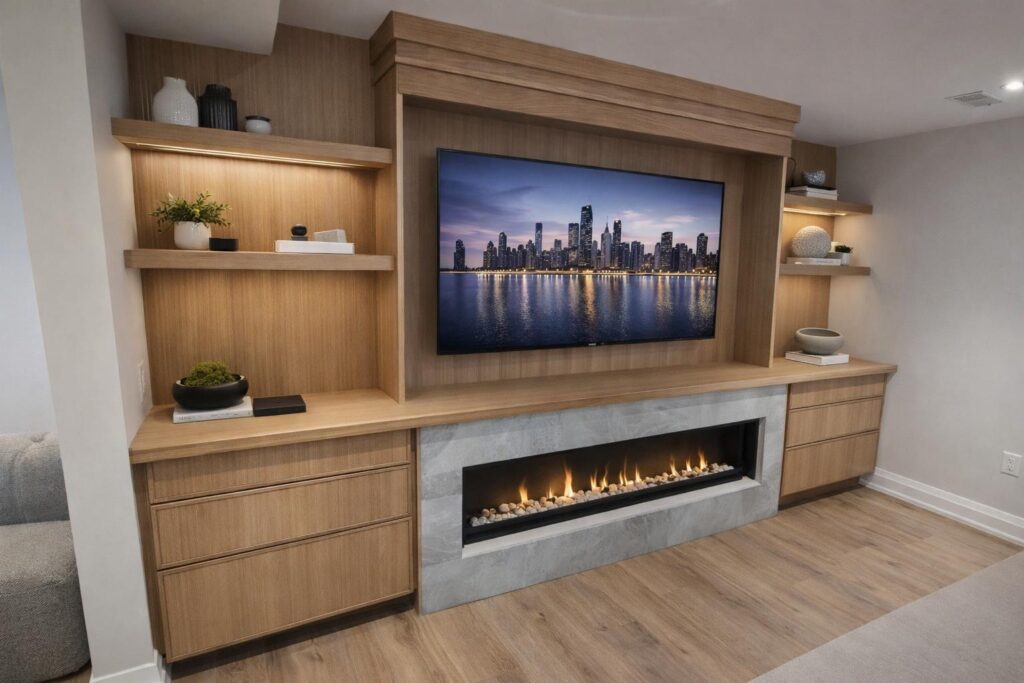
The level of finish dramatically impacts pricing. Basic trim and laminate flooring are very different from custom built-ins, feature walls, fireplace surrounds, luxury vinyl plank flooring, decorative wall treatments, and detailed millwork.
The closer the basement is meant to feel to the main level of the home, the more important finish quality, detail, and design coordination become.
Many older homes in Hamilton have basements with lower ceiling heights, exposed beams, bulkheads, or structural limitations that affect design options. In some basements, the challenge is simply working around these conditions in a smart way. In others, homeowners explore more involved structural upgrades to improve the space.
Depending on the house, structural work may involve beam modifications, post relocations, engineering review, or more significant foundation-related options such as underpinning or bench-footing. These types of upgrades can have a major impact on cost and usually require permits and professional planning.
Not every basement needs structural changes, but ceiling height and headroom are important factors to consider early when planning layout, lighting, and room uses.
In many older homes, structural and ceiling-height considerations are a major reason why basement renovation cost Hamilton projects can vary so widely from one home to the next. Two basements may have similar square footage but very different construction realities.
When homeowners talk about “finishing the basement,” they often mean converting an unfinished lower level into a clean, comfortable living area without major customization. This is usually the most budget-friendly category of basement renovation.
Typical basic finishing work includes:
This type of renovation creates a functional living area that works well for recreation rooms, kids’ spaces, or general family use. Even at the more basic end of the range, quality still matters. Proper framing, insulation, and finish work go a long way in making the basement feel bright, warm, and intentional rather than temporary.
Mid-range basement renovations go beyond basic finishing and typically incorporate better lighting design, upgraded materials, and more thoughtful layout planning. This is where many homeowners end up because it strikes a strong balance between value and finish quality.
These projects may include:
This is also where design planning becomes especially important. Many homeowners benefit from working with professional architectural and interior design services to plan basement layouts before construction begins.
Basements can be deceptively tricky spaces. Bulkheads, support posts, stair landings, window locations, and mechanical rooms all influence layout decisions. A basement that is planned properly on paper usually performs much better in real life. It flows better, stores better, feels brighter, and avoids the common problem of looking new but functioning poorly.
High-end basement renovations transform the lower level into a fully integrated part of the home. These are not just finished basements. They are custom-designed living environments with a stronger focus on lifestyle, detail, and long-term value.
These renovations may include:
At this level, design planning and finish quality play a major role in determining the final cost. These spaces are often intended to feel like a true extension of the home rather than a separate lower-level zone.
For homeowners looking at premium finishes, custom millwork, or entertainment-driven layouts, basement renovation cost Hamilton budgets will naturally move higher because the basement is being treated as a true lifestyle space rather than a basic finished area.
Homeowners often want to know where the budget actually goes in a basement renovation. While each project is different, the cost is usually spread across several key categories.
Framing creates the structure for walls, rooms, closets, bulkheads, and layout divisions. The more detailed and complex the layout becomes, the more labour and material this stage requires.
Proper insulation helps maintain comfort and improve energy efficiency. It also plays an important role in how the basement performs over time, especially in Ontario’s climate.
Drywall installation, taping, sanding, and finishing create the final interior surfaces. Basements often contain a surprising number of corners, boxed-outs, and transitions, which can make drywall work more involved than homeowners expect.
Electrical work includes lighting, outlets, switches, smoke detectors, fan wiring, and any specialty circuits required for offices, bathrooms, gyms, or entertainment zones.
Heating and ventilation adjustments help ensure the basement remains comfortable year-round. This may include extending ductwork, adding returns, or improving ventilation in enclosed rooms and bathrooms.
Luxury vinyl plank and laminate flooring are common basement choices because of their durability and moisture resistance. Tile is also common in basement bathrooms and certain utility spaces.
Baseboards, casings, interior doors, closets, and hardware complete the finished appearance. These details can have a major impact on how polished the basement feels.
Painting ties everything together. Primer, ceiling paint, wall paint, trim paint, and touch-ups all contribute to the final finished look of the space.
Adding a bathroom to a basement typically ranges between $12,000 and $25,000+ depending on plumbing access, drainage requirements, waterproofing systems, tile work, fixture selections, and overall design.
Key cost factors include:
If the basement bathroom includes a tiled shower, custom glass, upgraded fixtures, or layout changes around mechanical areas, the cost can move up quickly. This is why basement bathrooms are often one of the biggest upgrades within the overall basement budget.
In many cases, yes. Basement renovations often require permits when framing, plumbing, insulation, structural changes, or new bedrooms are involved. Permit requirements can also come into play when ceiling heights, egress, fire separation, and ventilation are part of the design.
Homeowners can review building requirements through the Ontario Building Code.
Trying to rush a basement renovation without clear planning can create avoidable delays, revisions, and extra costs later on. Understanding the code side of the project early helps keep the process smoother and more predictable.
Because basements sit below ground level, they are exposed to different moisture and temperature conditions than upper floors. That is why insulation and moisture control deserve special attention during basement renovation planning.
Common insulation strategies include:
Proper insulation helps maintain comfortable indoor temperatures while reducing the risk of long-term moisture-related issues. It also improves the overall feel of the basement, especially during colder months.
The right approach depends on the age of the home, the type of foundation wall, the intended use of the basement, and the overall assembly being built. There is no one-size-fits-all answer, but there is always value in evaluating insulation and moisture control carefully before closing everything in.
Before starting a basement renovation, homeowners should first define how the space will be used. This helps guide the design and keeps the project grounded in realistic priorities.
Understanding the purpose of the space helps shape the layout, lighting, electrical planning, and finish level. It also helps separate must-haves from nice-to-haves, which is one of the smartest ways to build a basement budget properly.
A well-planned basement renovation budget should reflect not just what the homeowner wants visually, but also what the basement needs technically in order to perform well over time.
Homeowners can manage renovation costs by making smart planning decisions early rather than reacting during construction.
The goal should never be to cheapen the project. The goal is to spend smart. In many cases, the worst place to cut corners is on the hidden technical side of the renovation. Moisture protection, insulation quality, framing, and airflow matter more than many homeowners realize.
Finishing a basement can increase both the usability and the appeal of a home. While the exact return on investment varies from house to house, a well-designed basement often makes the property more attractive because it adds functional living space without changing the footprint of the home.
A finished basement can also improve resale appeal by offering more room for family use, guests, work-from-home needs, or general flexibility. In some homes, a finished basement can create a strong lifestyle advantage compared to similar properties with unfinished lower levels.
Beyond resale, there is also the value of how the home works for you while you live in it. For many families, that added function and comfort is one of the biggest reasons the renovation is worth doing.
Even good basement ideas can go sideways if the planning is rushed. Some of the most common mistakes include:
A successful basement renovation is not just about finishing the space. It is about making the basement comfortable, durable, functional, and consistent with the rest of the home.
Most basement renovations take several weeks to complete, depending on complexity, inspections, room count, bathroom additions, finish selections, and custom work. A straightforward basement finishing project may move faster than a renovation with multiple rooms, tile work, cabinetry, or structural considerations.
Projects that are fully planned before construction usually move much more efficiently. When layout, materials, and scope are defined in advance, the build phase tends to be smoother and more predictable.
Most basement renovations range between $40,000 and $120,000 depending on the size of the space, room count, bathroom additions, and level of finishes. More customized projects can go higher.
A 1,000 square foot basement renovation can vary widely depending on whether it is a simple open layout or a more customized project with bathrooms, bedrooms, offices, upgraded finishes, and built-ins.
For many homeowners, yes. Finishing a basement can significantly increase usable living space, improve how the home functions, and make the property more appealing in the long term.
Many basement renovations require permits depending on the scope of work, especially when structural changes, plumbing, framing, insulation, or bedrooms are involved.
Bathrooms, complex layouts, structural changes, and higher-end finishes are often the biggest factors that push basement renovation costs upward.
A well-planned basement renovation can dramatically improve how your home functions while adding valuable living space. Cost depends on more than size alone. Layout, bathroom additions, insulation strategy, electrical planning, finish level, and overall design all play a major role in the final investment.
If you are researching basement renovation cost Hamilton and trying to understand what type of budget makes sense for your home, the best place to start is with a clear layout, a realistic scope, and a design-build approach that accounts for both the visual and technical sides of the project.
If you are considering a basement project, explore our finished basement renovation services or learn more about our architectural and interior design services.
When you’re ready to start planning your renovation, contact Zzone Homes to discuss your project.
PLANNING, DESIGN, MATERIALS AND CONSTRUCTION UNDER ONE ROOF

Email Us
marco@zzonehomes.ca

Call Us
(905) 906-9152
We just need a few details and we'll get in touch to learn more about your project.

Welcome to Zzone Homes Inc, your trusted home renovation contractors in Hamilton, Burlington, Stoney Creek, Ancaster, and Dundas. We specialize in complete home renovations, kitchen and bathroom remodeling, basement finishing, custom cabinetry, and home additions. With nearly 20 years of experience, our dedicated team delivers exceptional craftsmanship and personalized solutions for all your renovation needs.
